
Hybrid Address Intelligence: From ~5% to 80%+ Accuracy

Hybrid pipeline: clean messy input, anchor on Eircode, use AI only where ambiguity remains—so automation scales without silent failures


YourDelivery logo
Warehouse logistics with packages representing high-volume delivery and address processing

Messy customer input broke naive parsing—only ~5–6 of 100 addresses reconstructed correctly, forcing a full-time manual cleaning role. CVision built a hybrid pipeline: cleaning, deterministic extraction, Eircode as ground truth, controlled LLM for street-level ambiguity, confidence scoring, and human review—production API with batch ~1000/day and observability. Accuracy rose to over 80%; validation drag dropped sharply.

Meet our client

Client: YourDelivery
Industry: Logistics
Market: Ireland
Solutions: Industrial Automation

Who this is for

Logistics and delivery teams, e-commerce fulfillment, and any operation where unreliable customer input forces manual validation, slows dispatch, and inflates cost—especially when “the form looks structured” but the data behind it is not.

The challenge

YourDelivery relied on structured address fields—but in production, input quality was highly unreliable. Customers frequently:

  • submitted incomplete or incorrect address details;
  • mixed names, phone numbers, and irrelevant text into address fields;
  • introduced typos and inconsistent formatting at high frequency.

The operational result:

  • the system could only reconstruct roughly 5–6 correct addresses out of 100;
  • manual validation became mandatory, including roughly one full-time role dedicated to cleaning addresses;
  • delivery workflows slowed and backlogs formed—this was both a cost and a speed problem.

Growth was constrained by data quality and process drag, not by lack of demand for deliveries.

What CVision identified during the audit

The core issue was not “we need more AI.” It was bad input structure combined with over-reliance on naive parsing logic.

  • Deterministic-only approaches failed because real-world inputs were too inconsistent.
  • A pure LLM approach would introduce guesswork and hallucination risk on high-stakes location data.
  • Address reconstruction needed a hybrid system, not a single hammer.
  • A reliable geographic truth source—Eircode—was underutilized relative to its value.
What the audit surfaced: the failure mode was structural, not “missing AI”

The missing layer: separate structured signal from noisy input before processing, then route work based on confidence—not hope.

Logistics and warehouse operations context

Warehouse and logistics operations with stacked packages representing high-volume delivery throughput
At volume, small accuracy gaps become large operational tax—unless the system can trust its own outputs or flag uncertainty explicitly.

The system we designed

CVision designed a hybrid address intelligence pipeline—not a single model, not a brittle rules engine pretending to be “done.”

Hybrid address intelligence pipeline (deterministic-first, AI where ambiguity remains)

What was built

  • A backend API integrated into the client workflow (microservice-style delivery to existing ops systems).
  • Batch processing at roughly ~1000 addresses per day at peak throughput needs.
  • Hybrid deterministic + LLM processing engine with explicit stage boundaries.
  • Confidence scoring and a human-in-the-loop path for edge cases—no silent failures.
  • Observability through batch-level accuracy tracking so improvements are measurable over time.

The implementation was meant to be reusable, maintainable, and operable by internal teams—not a one-off script.

Why this was production-grade

This was positioned as infrastructure, not a demo wrapper around an API call.

  • Controlled AI usage: LLMs only where necessary—not as the primary decision engine for location.
  • Deterministic-first architecture: consistency and reduced hallucination risk on core paths.
  • Fallback + human review: explicit handling when confidence is low.
  • Confidence scoring: safe automation at scale instead of “always auto.”
  • Data integrity focus: Eircode as a ground-truth anchor for geographic correctness.
  • Batch scalability: engineered for sustained daily volume—not occasional tests.

Outcome

  • Address accuracy improved from roughly ~5–6% to over 80%.
  • Manual validation workload reduced drastically (unlocking capacity previously consumed by cleaning).
  • Processing scaled to about ~1000 addresses per day in batch throughput.
  • Faster delivery workflows driven by cleaner, more trustworthy inputs.
  • Lower operational drag and cost through system design—not brute-force headcount.

The system continues to improve with further tuning—accuracy is treated as a product metric, not a one-time launch claim.

Messy inputs eating your operations?

If unreliable data is forcing manual work, start with an audit that separates what’s fixable with structure from what needs intelligence—without gambling on blind automation.

Share this post

Showcasing Our State-of-the-Practice

Team collaboration meeting representing hiring and creative work coordination
SanjhPROJECT

Localized Creative Hiring MVP Built in Two Weeks

Sanjh: full-stack marketplace MVP for Pakistan—talent and vendor flows, AI-assisted matching, admin, deployable in ~2 weeks. Structure over bloat, validation over feature creep.

Analytics dashboard on screen representing unified business visibility and decision support
BridgeBotPROJECT

AI Copilot for a Unified Business Decision Layer

Live copilot over Gmail, WhatsApp, Docs, and Notion—knowledge graph, daily priorities, and a real decision layer. Hours of context-building reduced to minutes.

Team collaboration in a modern office, representing startup support and founder programs
BizmilaPROJECT

Structured AI for Startup Quality and Investor Readiness

Full-stack AI product: structured founder journeys, LLM critique of decks, iteration loops, progression tracking—Next.js, Node, PostgreSQL. From manual reviews to scalable founder development.

Circuit board and microelectronics representing edge and neuromorphic computing hardware
Type 1 Compute logoPROJECT

Neuromorphic SDK Six Months Ahead of Schedule

Full neuromorphic SDK layer—PyTorch bridge, spiking/hybrid conversion, visualization, simulation, and observability—roughly six months faster than planned.
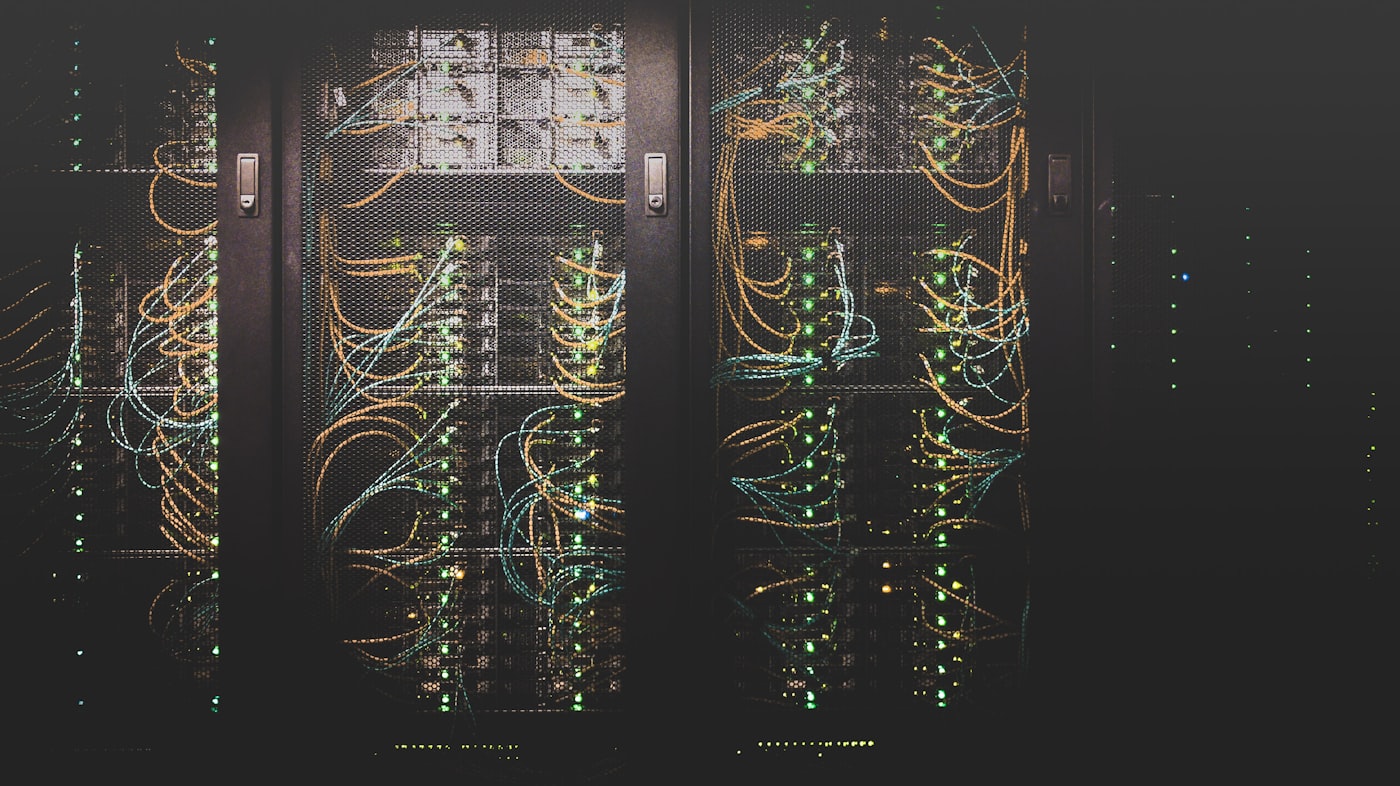
Server room with network hardware representing secure on-premises infrastructure
Noah Labs logoPROJECT

Secure AI for Legacy Code in Regulated Environments

Air-gapped, API-free legacy transformation pipeline—AI-assisted COBOL/C toward Java/Rust, controlled validation, modular design for regulated and mission-critical contexts.

Designer workspace with sketches and tools representing creative brand work
Infinity Design Studio logoPROJECT

From Weeks to Hours: GenAI Logo Prototyping

Client-facing GenAI for logo concepts—studio style families, guided prompts, multi-round iteration, auth and cost tracking on AWS. Designers focus on refinement, not endless first drafts.

Business workspace with laptop and phone representing CRM operations and outbound calling
Small Biz Acquisitions logoPROJECT

From Messy CRM to Daily AI Qualification

CRM cleanup on HubSpot/GHL, then daily AI calling with qualification, booking, funnel routing, and Sheets reporting—~10–15 hours saved per week for a solo operator.

Professional wearing a headset at a desk, representing AI-assisted call handling
No-AnswerPROJECT

Production AI Receptionist Platform

Multi-tenant voice platform in ~2 weeks: VAPI + telephony, tasks and transcripts, WhatsApp to owners, human fallback, and a Next.js dashboard—built for real operators, not engineers.

Data analytics dashboard showing business forecasting metrics
ConfidentialPROJECT

Data Modernization for a Global FMCG Leader

Transformed chaotic Excel-based forecasting workflows into streamlined, automated systems, reducing processing time from one week to three hours.

STRONG Pilates modern fitness studio with state-of-the-art equipment
STRONG Pilates logoPROJECT

Franchise Lead Qualification at Scale

Qualification logic on top of existing CRMs: MCP-powered access, semantic and rule-based scoring, daily top-lead digests, and AI-assisted outreach—$373K–800K franchise commitment.

Warehouse logistics with packages representing high-volume delivery and address processing
YourDelivery logoPROJECT

Hybrid Address Intelligence: From ~5% to 80%+ Accuracy

Eircode-anchored hybrid pipeline: clean noisy input, deterministic parse, controlled LLM for ambiguity, confidence + review—~1000 addresses/day, accuracy from ~5–6% to over 80%.

Unlock a Competitive Edge With AI Solutions

Join established companies, from global brands to ambitious scaleups, who partner with us to achieve exceptional results.